
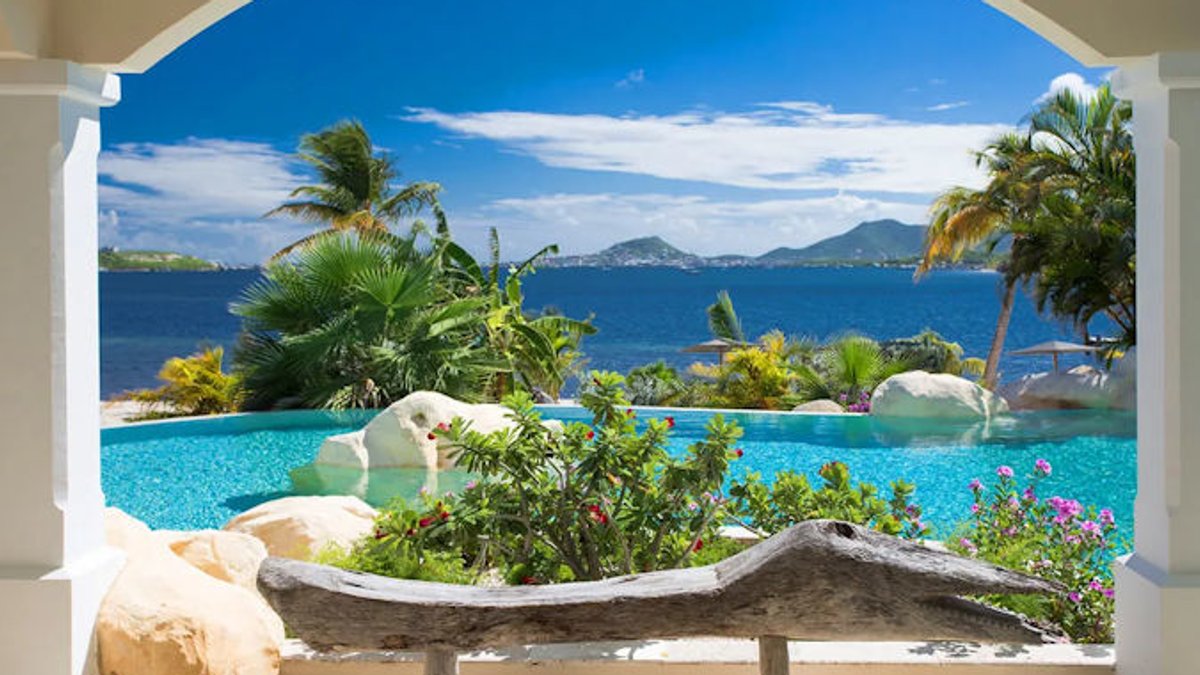
Ultra-luxury travel focuses on location and how spaces connect to their surroundings.
St. Martin: Beachfront villas with island rhythm
The island’s coastline changes depending on location. On the French side, Grand Case’s narrow strip of sand sits just off Boulevard de Grand Case, where calm water reaches the road. A short drive away, Orient Bay stretches wide, with wind rolling in from the Atlantic.
For those seeking privacy, Terres Basses on the western edge provides large beachfront villas with direct access to Baie Rouge and Baie Longue. These properties are designed for seclusion—wide terraces, full kitchens, and unobstructed ocean views—yet remain close to Marigot Market. The market sells fresh produce and local goods several days a week, offering space without isolation.
Costa Rica’s Papagayo Peninsula: Volcanic ridges and dry forest
The drive from Liberia’s Daniel Oduber Airport takes about 40 minutes, passing through dry forest with long stretches of empty road. As the terrain rises near the peninsula, views open over the Pacific and surrounding bays.
Luxury villas are positioned along ridgelines, spaced to maintain quiet surroundings. Below, Playa Nacascolo and Playa Virador feature calm, shallow water and soft sand. Paddleboards and small boats dot the shore in the afternoons.
Related: Why Comfortable Temperatures Matter for Tourist Rentals
Some properties use AI receptionists to manage guest calls and maintenance scheduling. The system allows staff to prioritize in-person service, ensuring villas remain guest-ready without delays.
Outside the peninsula, El Coco’s main street curves along the beach, lined with local vendors and small shops. Walking trails wind through the hills, where howler monkeys, coatis, and iguanas often appear.
These destinations provide more than comfort—they allow travelers to engage with a place at its own pace. In St. Martin, villas place visitors steps from a market, while Costa Rica’s ridges let them watch the light shift over the water. The setting shapes the experience.
The Maldives: Overwater villas and shifting tides
Most arrivals in the Maldives involve a seaplane transfer, with islands appearing as small rings in shallow lagoons. Each resort occupies its own island, so once visitors land, everything occurs within that space. Walkways extend over the water, connecting villas, beaches, and central areas.
Overwater villas are standard, built on stilts above the lagoon with direct sea access. Early mornings offer the clearest views of marine life—manta rays, whale sharks, and sea turtles—moving through the shallows. Snorkeling spots are marked nearby, where coral attracts schools of fish. The water shifts from pale blue near the villas to deeper tones further out.
Related: Miami luxury real estate booms with local insight
The islands are compact. Sand paths connect different resort areas, and tides reshape the shoreline throughout the day, exposing sandbanks or pulling water back. Some resorts include small craft areas or local-style stalls, but most activity centers on the lagoon and reef.
Seychelles: Granite boulders and emerald waters
Mahé serves as the main entry point, and Victoria’s Sir Selwyn Selwyn-Clarke Market is often the first stop. The compact space buzzes in the mornings, with stalls selling fish, spices, and produce. Roads then climb into the hills, where viewpoints open over the coastline.
Beau Vallon Beach on the northwest side is one of the most accessible, with calm water and a wide shoreline. Further south, Anse Intendance feels more open, with stronger waves and fewer people. The drive between them follows narrow coastal roads that hug the island’s shape.
On Praslin, Anse Lazio is known for its clear water and granite boulders along the shore. Inland, Vallée de Mai presents a different environment—dense forest and coco de mer palms under a protected canopy.
These places offer more than luxury. They provide a way to experience a setting, whether through the Maldives’ shifting tides, Costa Rica’s volcanic ridges, or the Seychelles’ granite peaks. The choice involves how travelers want to engage with each setting.


