
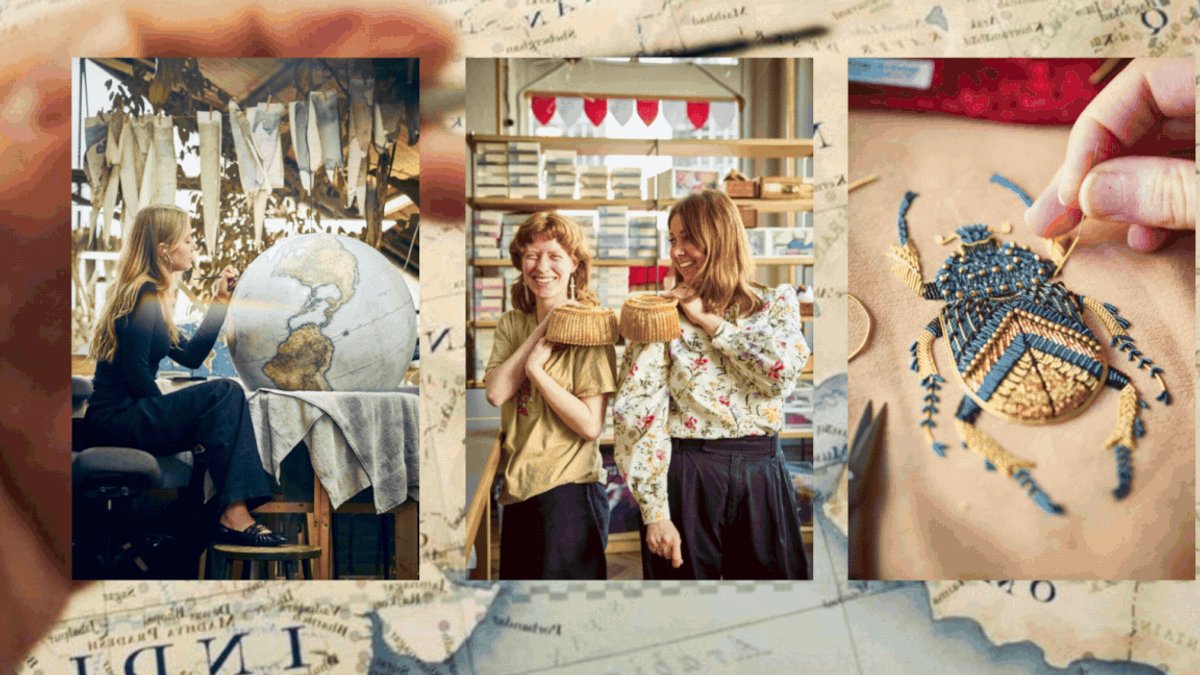
London’s craft revival represents more than a passing interest—it reflects a deep-rooted commitment to hands-on creation in a city where artisans have long shaped global design. This year’s London Craft Week attracted 250,000 attendees, a dramatic rise from just 20,000 in 2015, demonstrating the enduring appeal of handcrafted work. Glassblowers, textile artists, and ceramicists filled galleries and studios, yet the city’s craft heritage stretches far beyond temporary exhibitions.
Guilds established in the 12th century remain active today, with 114 livery halls preserving skills ranging from tailoring to pewterwork. In an era dominated by automation, Londoners and visitors alike seek objects with documented origins, human craftsmanship, and a distinct sense of place. The result is a city where one can move seamlessly from a royal-approved Savile Row tailor to a Carnival costume workshop within hours.
The demand for handmade goods extends well beyond annual craft festivals. Since the launch of London Craft Week in 2015, similar events have proliferated: Collect gathers 300 artists annually at Somerset House, while specialized festivals for basketry—including the annual summer festival Tear Up—and pottery draw consistent crowds. Reality television programs like The Great Pottery Throw Down have further mainstreamed craft practices, while workshops—covering everything from knife sharpening to embroidery, have become as ubiquitous as coffee shops. The core attraction lies in authenticity. In a market flooded with AI-generated designs, London’s makers provide something irreplaceable: time-honored techniques, skilled labor, and the deliberate imperfections that define human work.
Lock & Co. Hatters, a 350-year-old shop in St. James’s, exemplifies this tradition. Milliners there continue to use wooden hat blocks carved by a single Luton workshop, and boaters are assembled by hand from strip straw, a technique now critically endangered. “You’re buying into a little piece of history,” says milliner Awon Golding. “And that’s so much more special.” The shop’s royal warrant, granted in the 18th century, highlights its enduring prestige.
Nearby, Anderson & Sheppard tailors on Savile Row maintain meticulous records of client measurements in ledgers that date back to 1906. “People like to come in and see their grandfather’s handwriting,” a corridor provides glimpses of the cutters at work, in full suiting, and paper patterns, anatomical blueprints, hanging from metal hooks.
Heritage tools meet modern craftsmanship
This historical connection distinguishes London’s artisans from mass-produced alternatives. A knife from Blenheim Forge, a Peckham-based collective, serves as both a tool and a piece of industrial heritage, crafted in a former 19th-century bronze foundry. The founders, Jon Warshawsky, combine self-taught methods with Japanese techniques, offering sharpening workshops alongside custom blade production. Meanwhile, Bellerby & Co. in Stoke Newington transforms globes into personalized artworks, hand-painting 12 to 24 gores per sphere and incorporating elements like migration routes or family narratives. Their largest creation, a 50-inch Churchill globe, is one of the world’s biggest hand-painted models, with limited viewing appointments.
Some of London’s craft traditions face revival. Basketry, for instance, has seen widespread renewal, including through the annual Tear Up festival. Meanwhile, Mary Wing To, a whip and harness maker, trained under the Queen’s master saddler before establishing her own practice. Her Croydon workshop blends equestrian craft with fashion sculpture, using Tohiti canes, a traditional material, and leather to produce pieces that straddle utility and artistry.
Read Also: Gentlemen Season 2 Moves to Italian Mob Territory
Kyriacos Hadjikyriacou, London’s leading pleater, operates from a north London hangar filled with industrial machinery and steam boxes. His creations range from student hairpieces to Alexander McQueen designs. “Pleating is geometry,” he explains. “Without precision, you’re merely folding, not pleating.” His meticulous approach extends to experimental projects, such as a white satin coffin inlay that took a year to develop.
Bookbinder Manuel Mazzotti pushes boundaries in east London, working with unconventional materials like Carrara marble and oversized clamshell formats. “Books hold cultural weight,” he argues. “They represent knowledge, status, and now, continuity in a digital age.” His installations, such as Sky in a Box for artist Hormazd Narielwalla, blur the line between functional object and artistic statement.
Beyond objects: craft as culture and connection
The craft revival transcends aesthetics, it supports genuine connection. In an algorithm-driven world, these makers offer tangible, human-centered alternatives. A hand-forged knife from Blenheim Forge becomes more than a utility tool; it sparks conversation. A custom globe from Bellerby & Co. moves beyond decoration to document personal histories. A Carnival costume from Allyson Williams carries cultural significance beyond its fabric.
London’s artisans demonstrate that tradition and innovation need not conflict. They sustain skills while adapting them to contemporary demands. In a city where past and future intersect, their work proves the enduring value of human craftsmanship.
London’s neighborhoods, each with a craft soul
The craft scene spans London’s neighborhoods, each offering distinct specialties. West London features Allyson Williams’s Carnival costumes in the Yaa Centre. East London hosts Manuel Mazzotti’s bookbinding studio in Stratford. South London showcases Michael Ruh’s glassblowing in Dulwich and Blenheim Forge’s knives in Peckham. The city center preserves the most storied workshops, including Lock & Co. in St. James’s, Anderson & Sheppard tailors in Mayfair, and Hand & Lock embroiderers in Fitzrovia.
To experience the full scope, visitors should plan a multi-day tour. Begin in the west, where high fashion and Carnival traditions coexist. Proceed eastward to explore bookbinding. South London reveals glasswork and leathercraft, while the center offers royal-warranted hats and Savile Row tailoring. The journey transforms craft appreciation into an immersive experience.
For accommodations reflecting London’s craft-luxury fusion, The Chancery Rosewood, formerly the US embassy near Savile Row, features gilded eagles and five restaurants. Six Senses London in Bayswater combines wellness with 1,000 live plants, while Broadwick Soho delivers maximalist design through Murano-glass chandeliers and Jaipur minibars. Each property mirrors the city’s blend of history and innovation, much like the artisans who define London’s creative identity.


